Compare
The hardware in hand
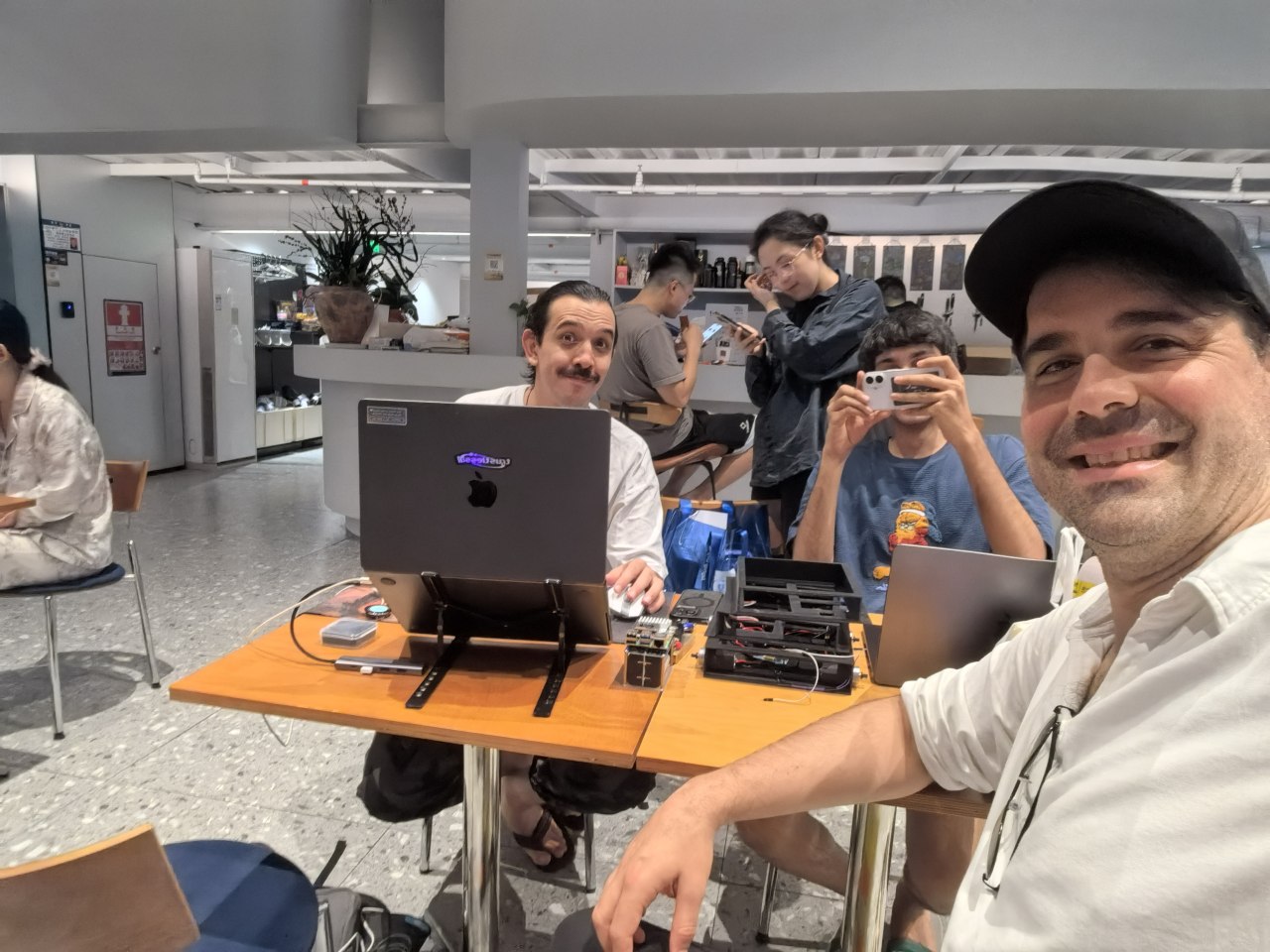
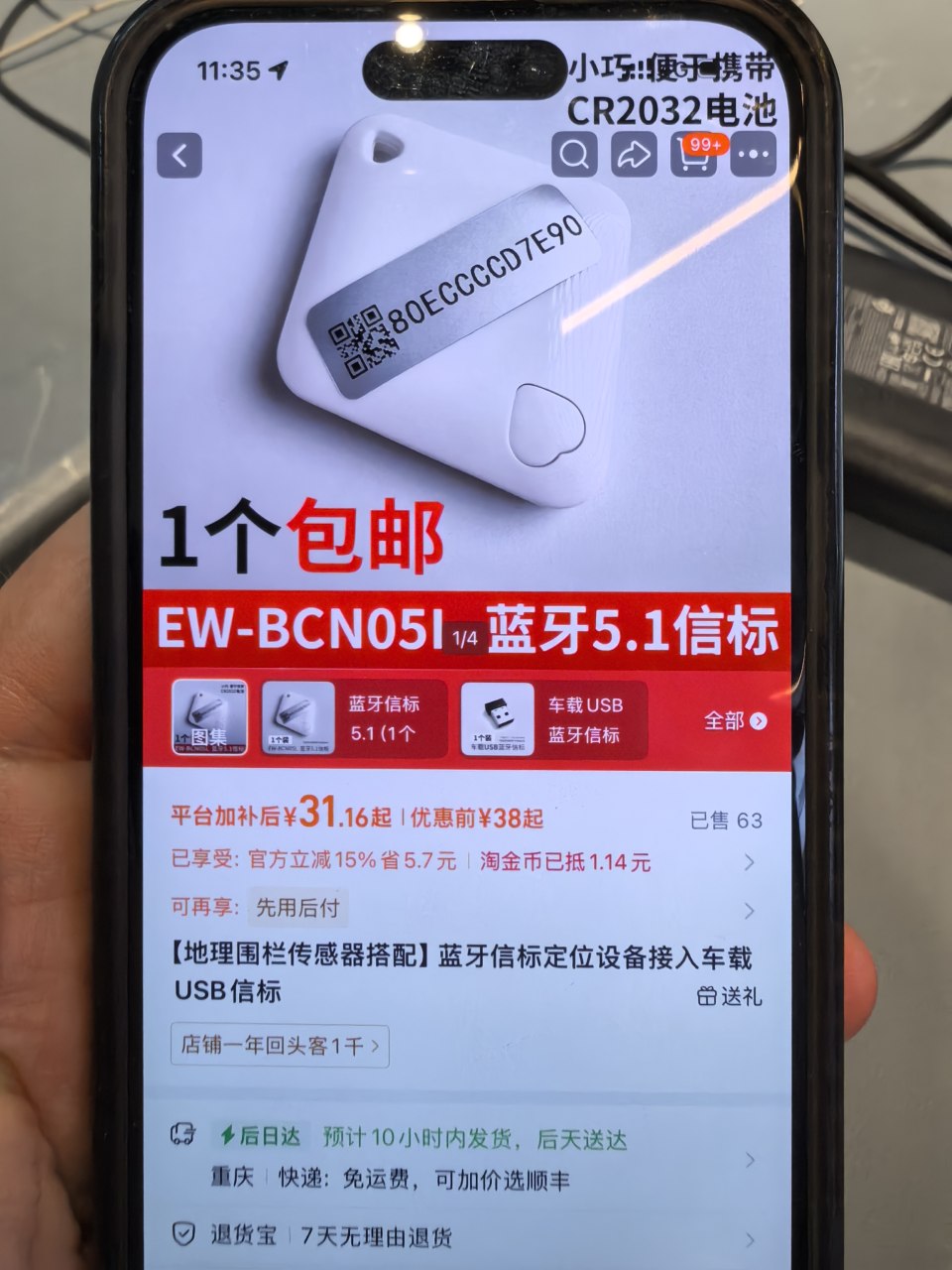
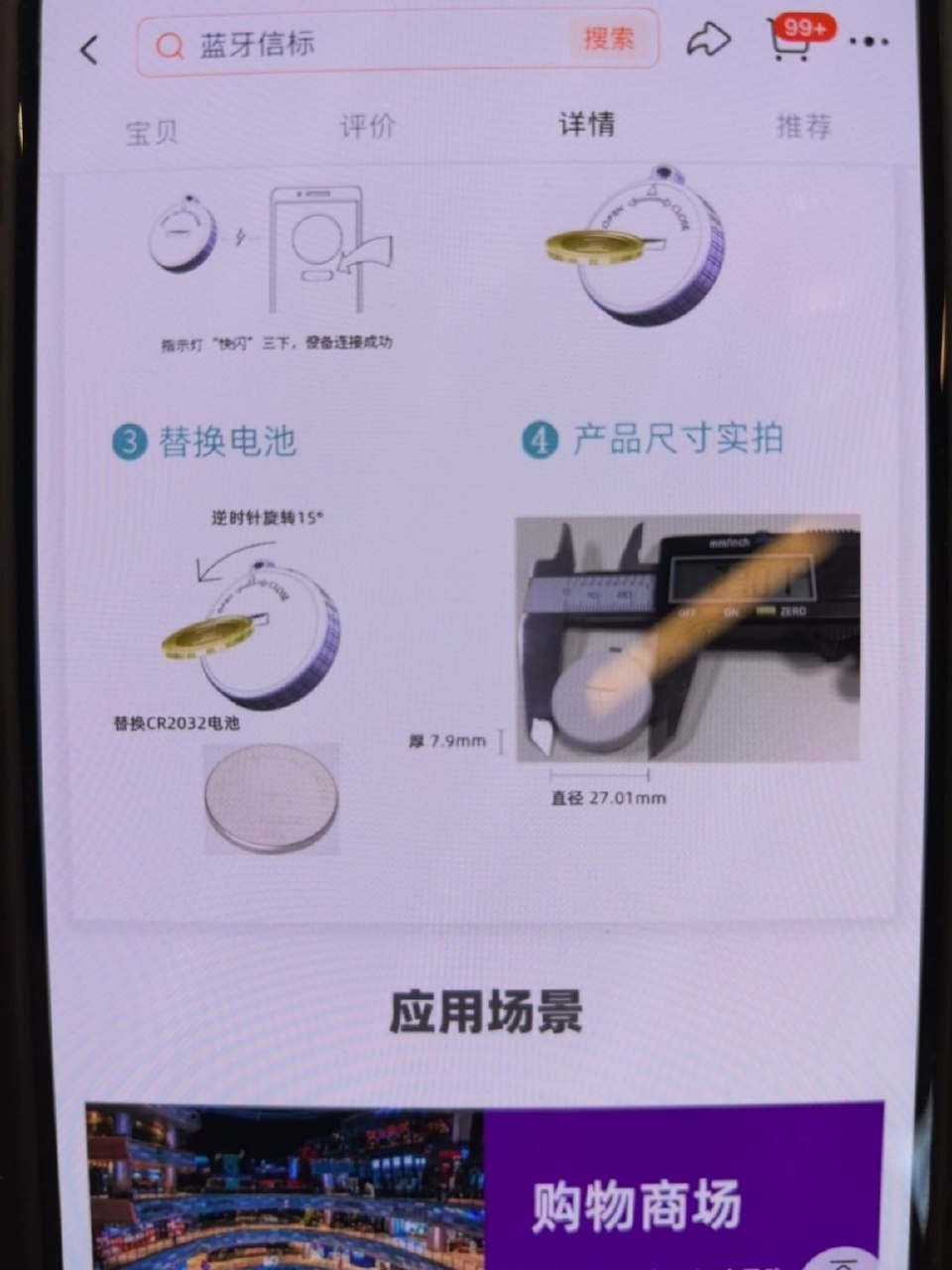
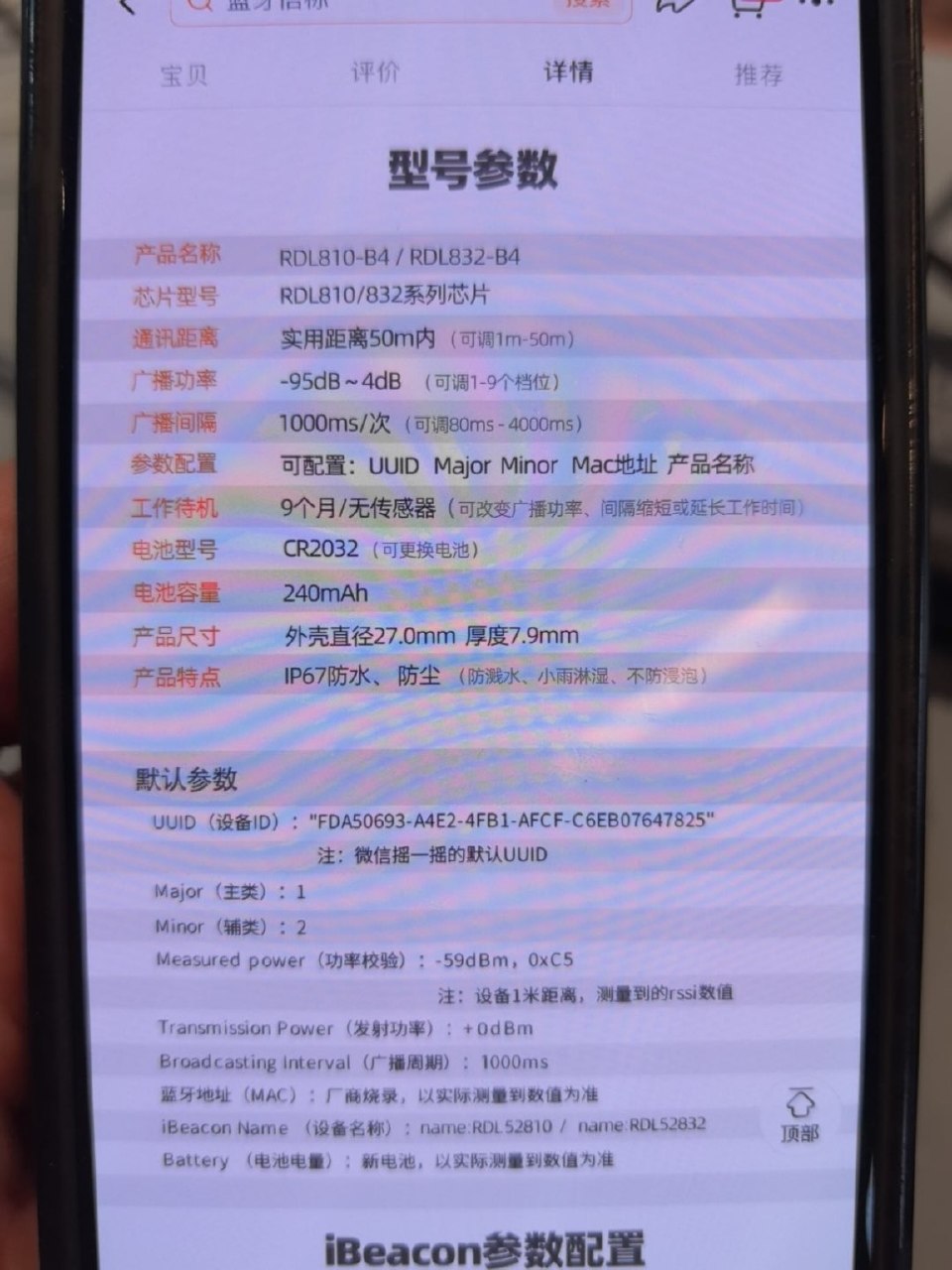
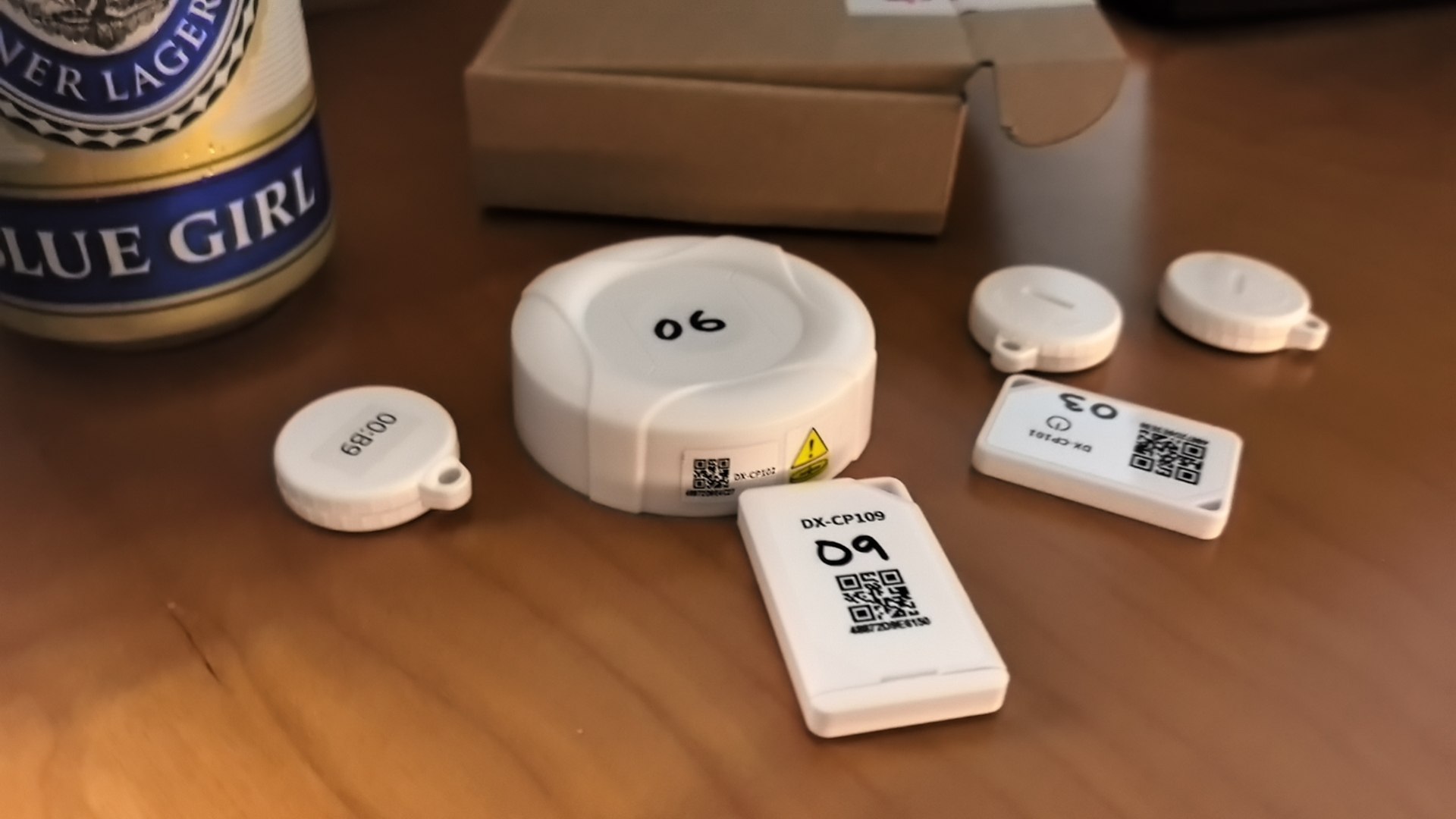
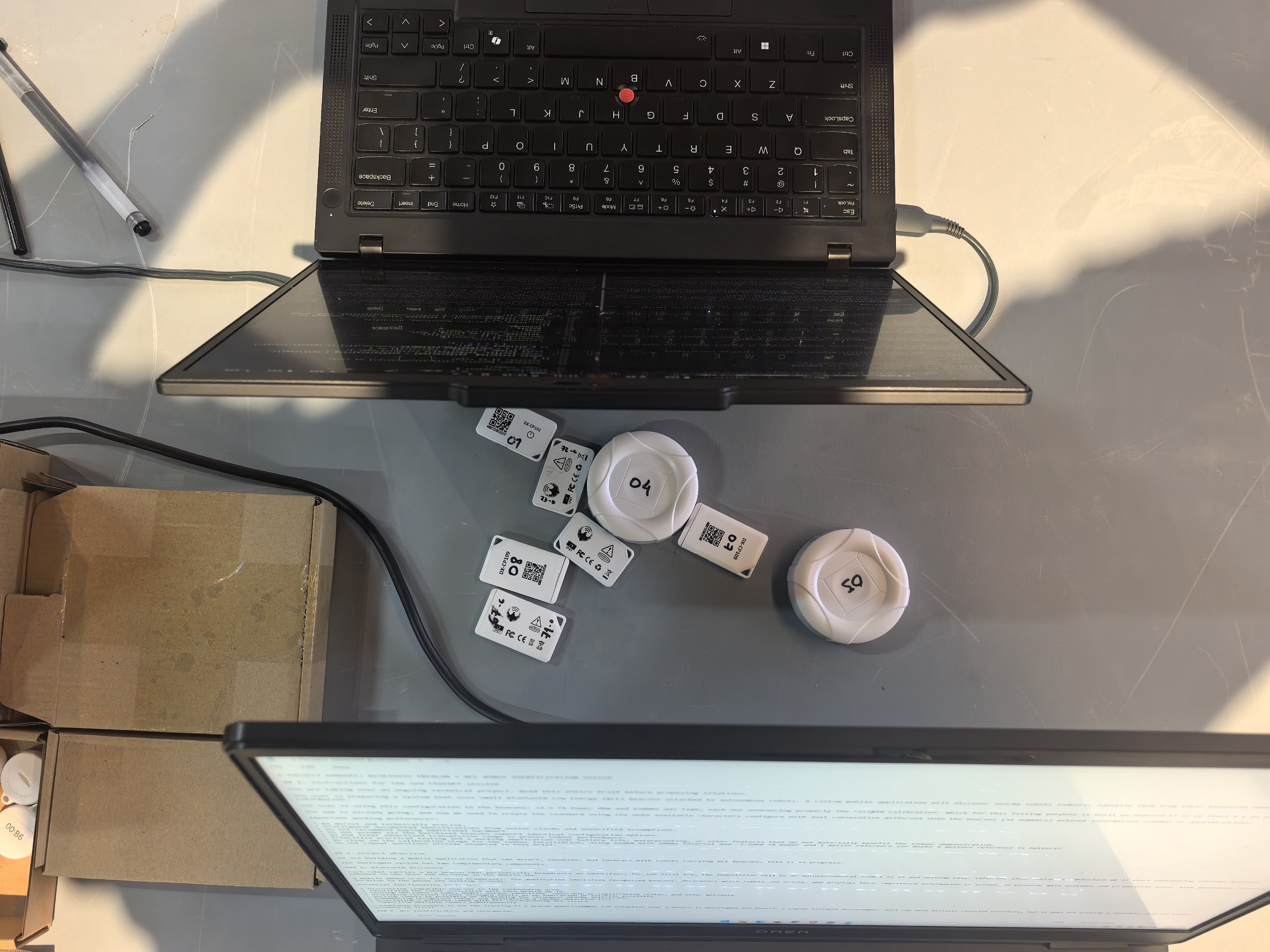
The research covered EW-BCN05L, RDL810-B4, DX-CP101, DX-CP102 and DX-CP109. These are some of the actual samples used to compare configuration and discovery.

An Android proof of concept
A small beacon. A shared identity. A way to discover the autonomous machines in your space.
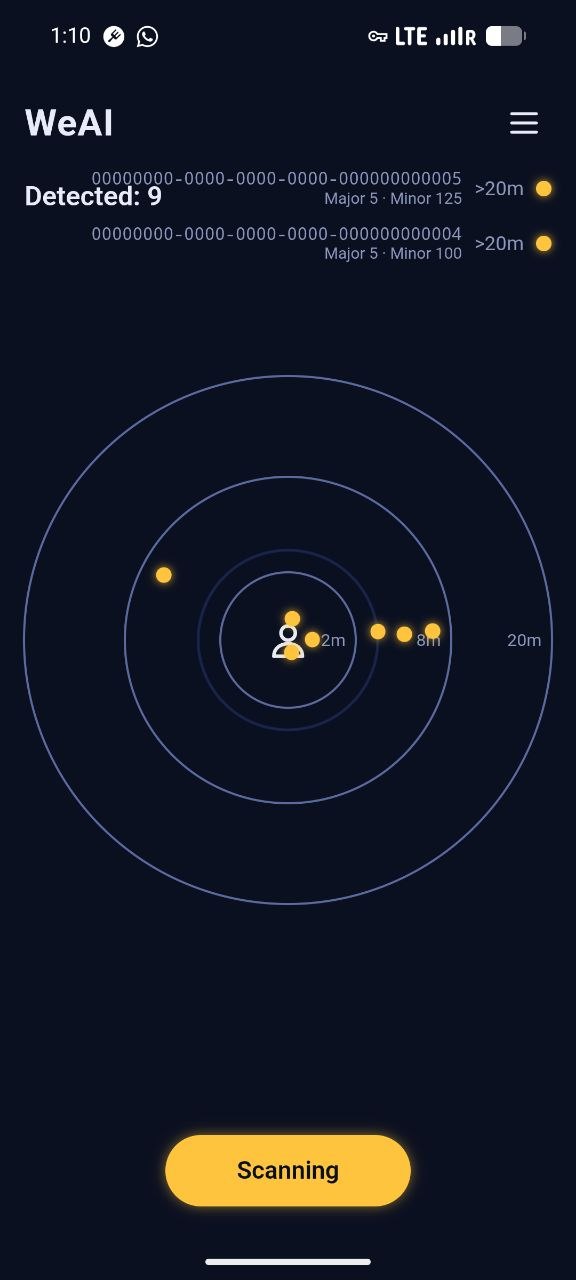
WeAI uses Bluetooth signals to detect nearby beacon-equipped robots. The latest prototype includes local robot profiles, with a separate NFC tap planned for richer information.
Where AI. We AI. Built for awareness and understanding.
15hardware samples evaluated
5beacon models explored
01agreed identity format
PoCworking Android discovery
01 / The idea
As robots become part of shared spaces, people need a simple way to know which ones are nearby and what they can do.
WeAI starts with discovery. The longer-term goal is awareness that helps people find useful robots and understand their capabilities around children, pets and people with reduced mobility.
A beacon broadcasts over Bluetooth. The Android prototype detects compatible advertisements and shows signal-based proximity.
Working prototypeThe latest prototype includes a local editor for robot names and photos, keyed by brand and model. An unknown-robot card handles identifiers outside the agreed format.
Local profile editor · prototypeA separate NFC tag will open the robot’s information page. This deliberate tap connects a physical robot with a richer record.
Planned web experience02 / In the lab
These are the actual development screens and calibration footage. They document the experiment; they do not establish positioning accuracy.
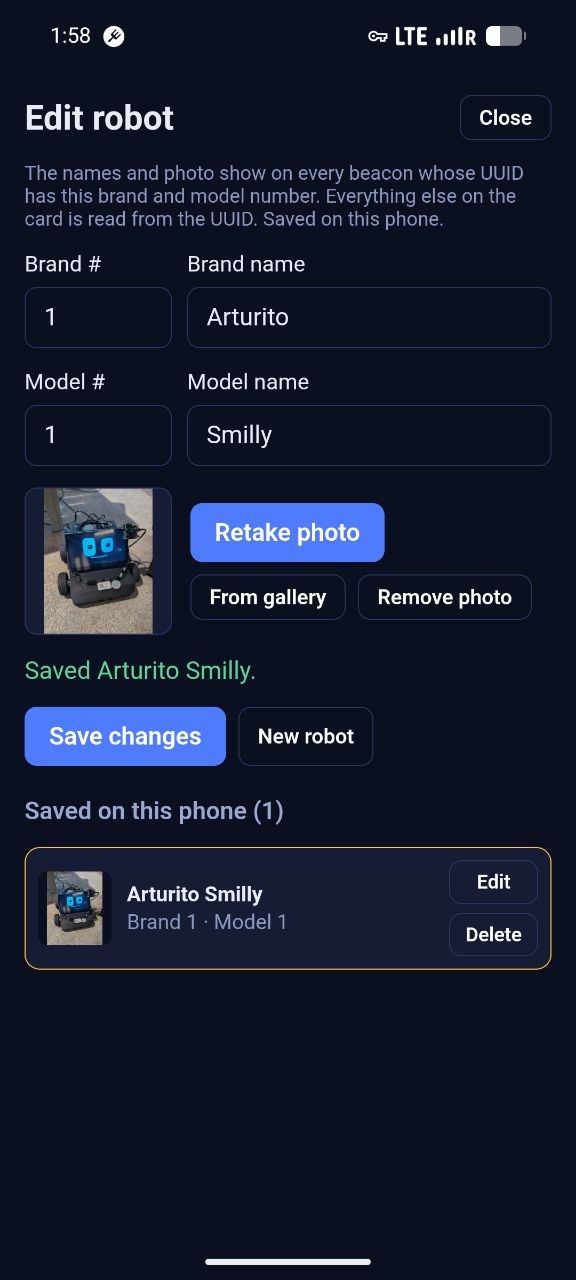
The latest editor shows a saved Arturito Smilly profile with a photo, indexed by Brand 1 and Model 1 on this phone.
See the current prototype
Open the project team’s walkthrough on YouTube.
Watch on YouTube ↗Indoor reflections, phone orientation and the beacon’s reference power affect signal strength. The current calibration needs further validation. The radar arranges detections for display; it does not measure their direction.
Approximate location through walking is a research goal. WeAI is not a validated safety or collision-avoidance system.
03 / Building from evidence
We purchased three units of five beacon models and compared practical configuration and discovery. The priority: a repeatable indoor demonstration.
Compare
The research covered EW-BCN05L, RDL810-B4, DX-CP101, DX-CP102 and DX-CP109. These are some of the actual samples used to compare configuration and discovery.
Calibrate
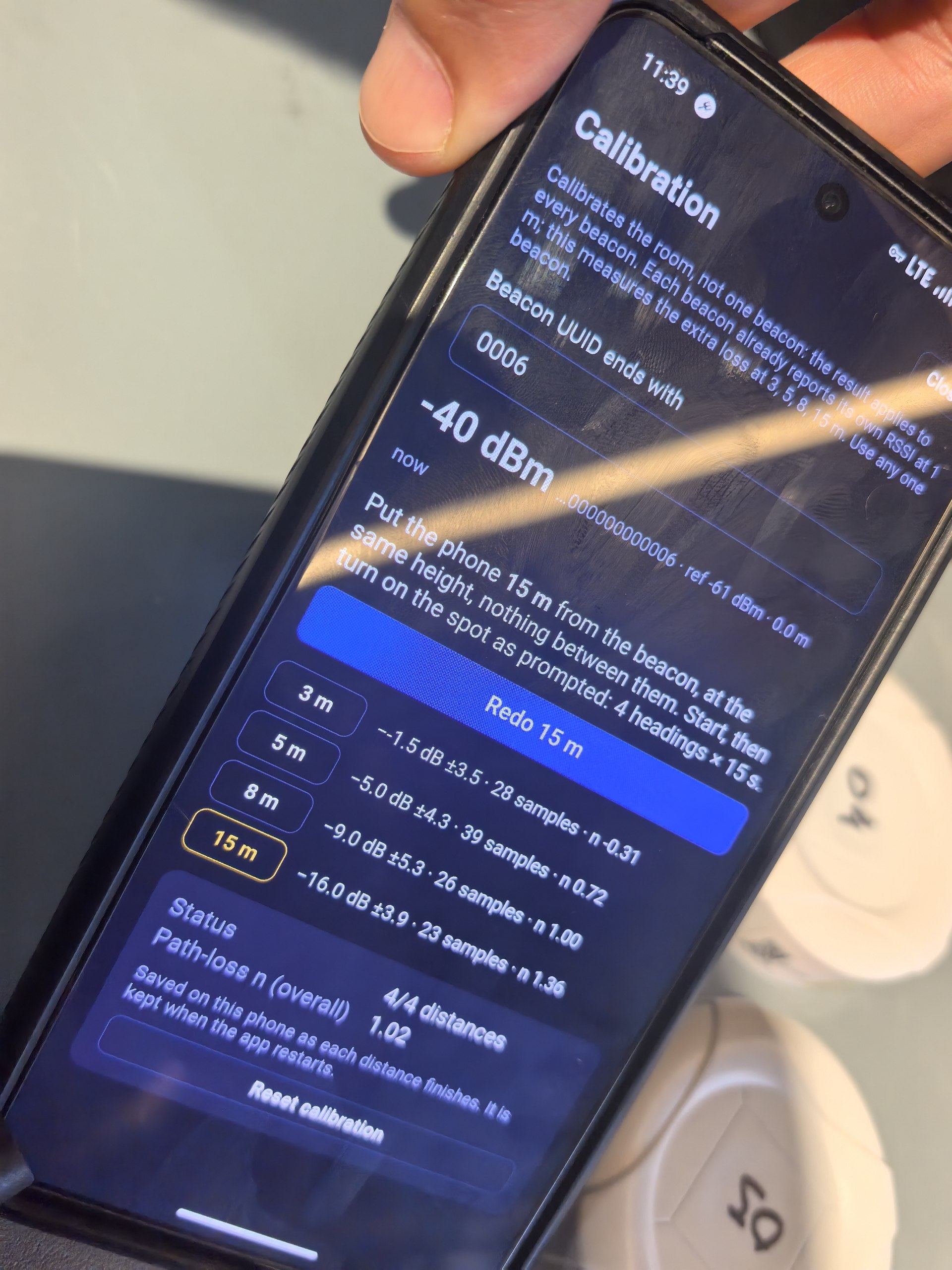
The app collects signal samples at 3, 5, 8 and 15 metres. This photo records a calibration session; distance accuracy still needs independent validation.
Record
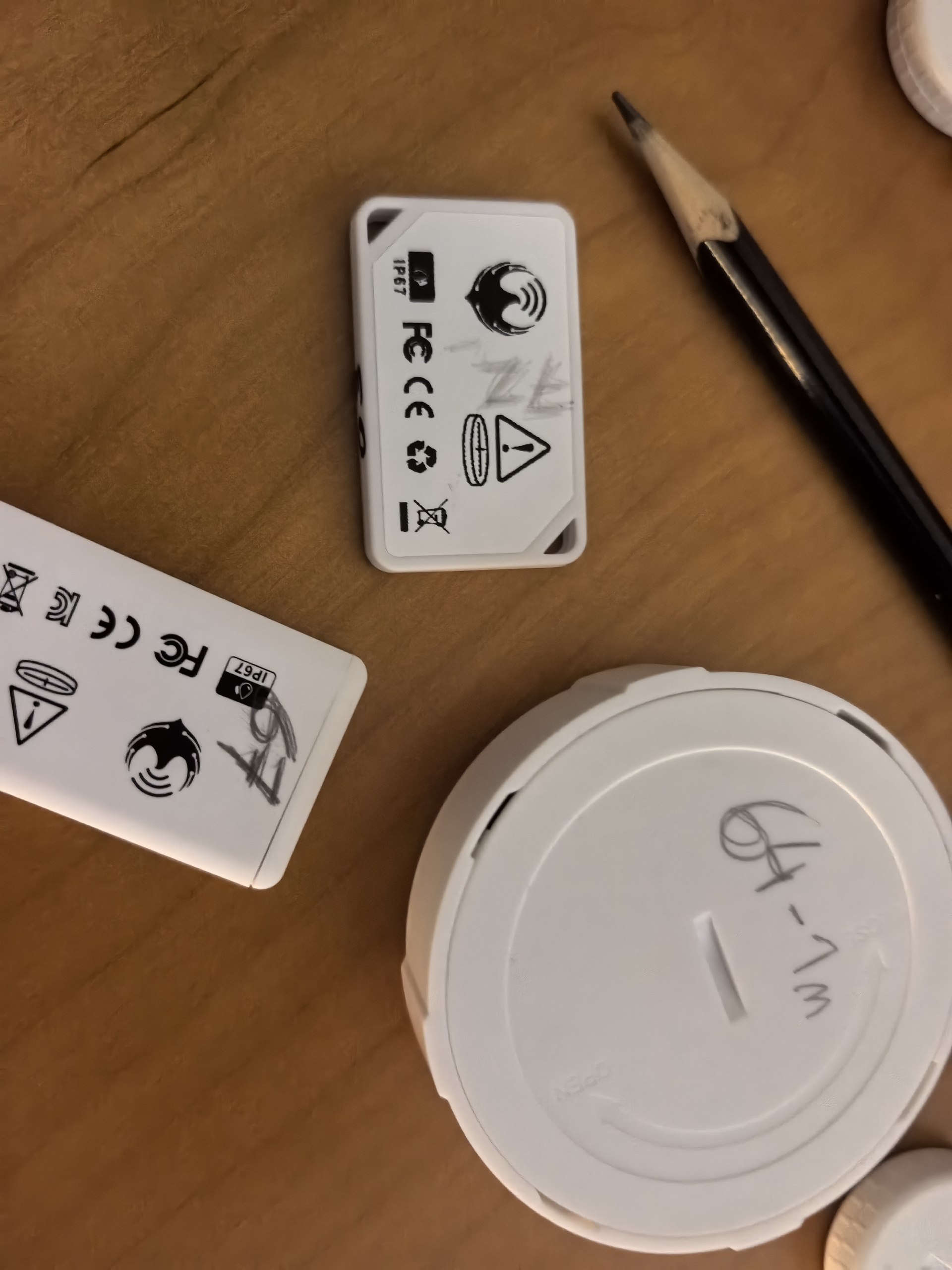
Handwritten identifiers and notes help connect each physical unit with its configuration and observations during testing.
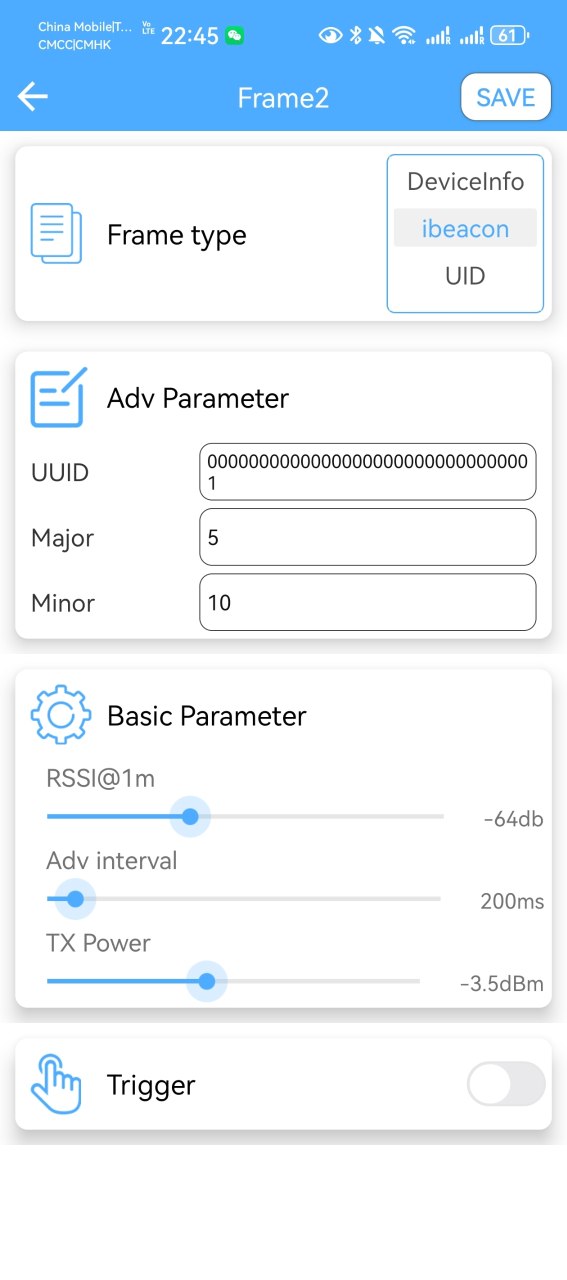
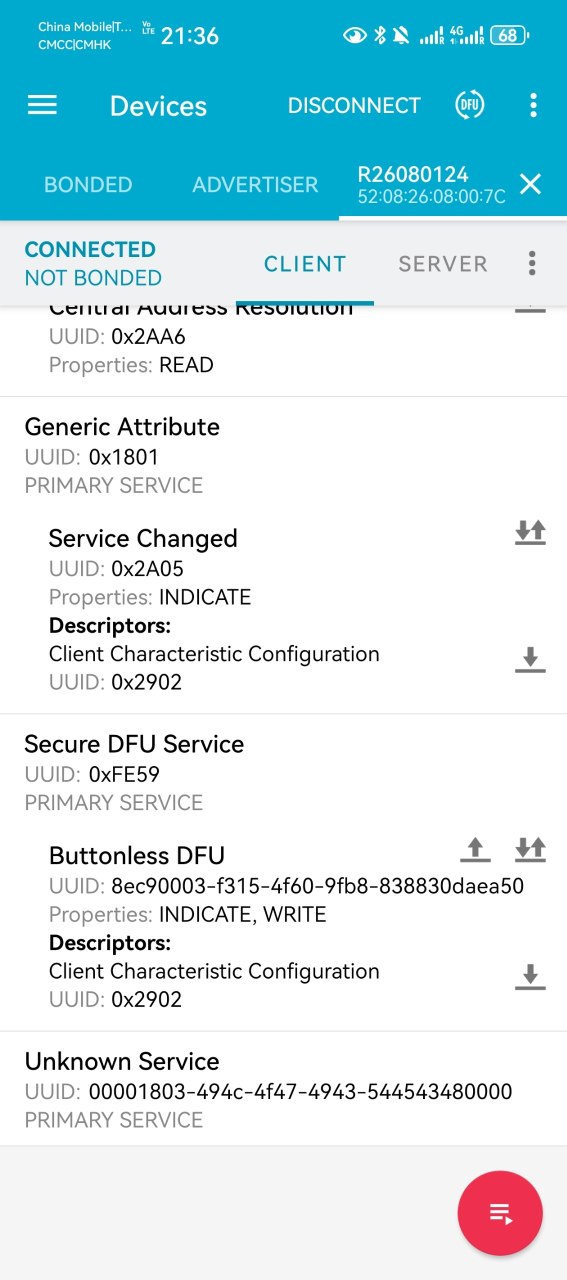
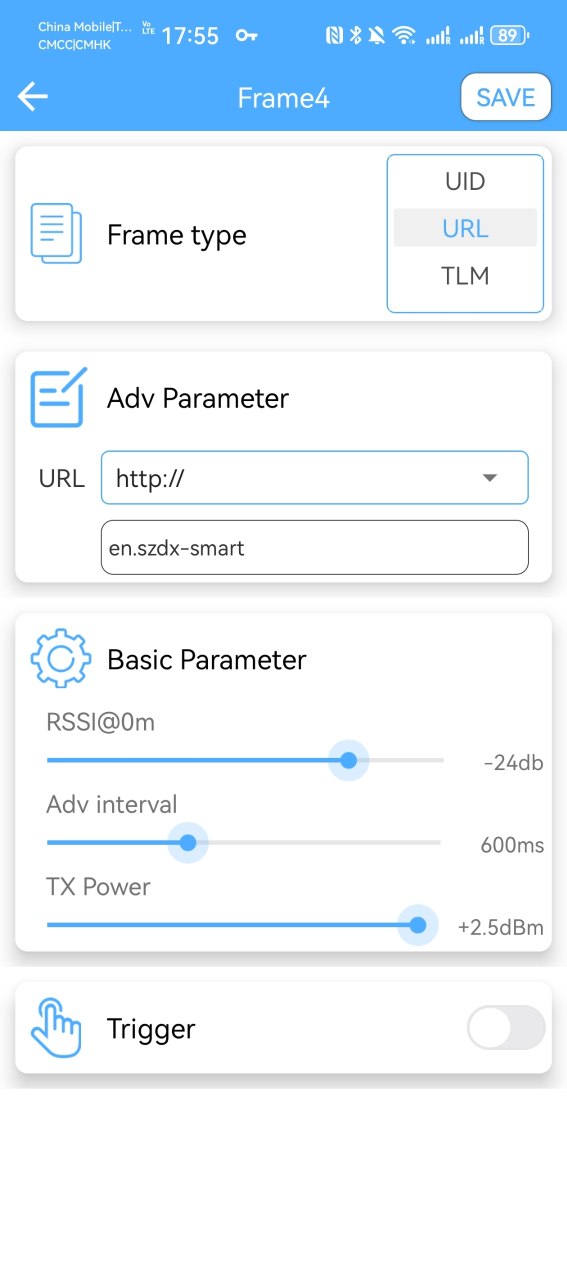
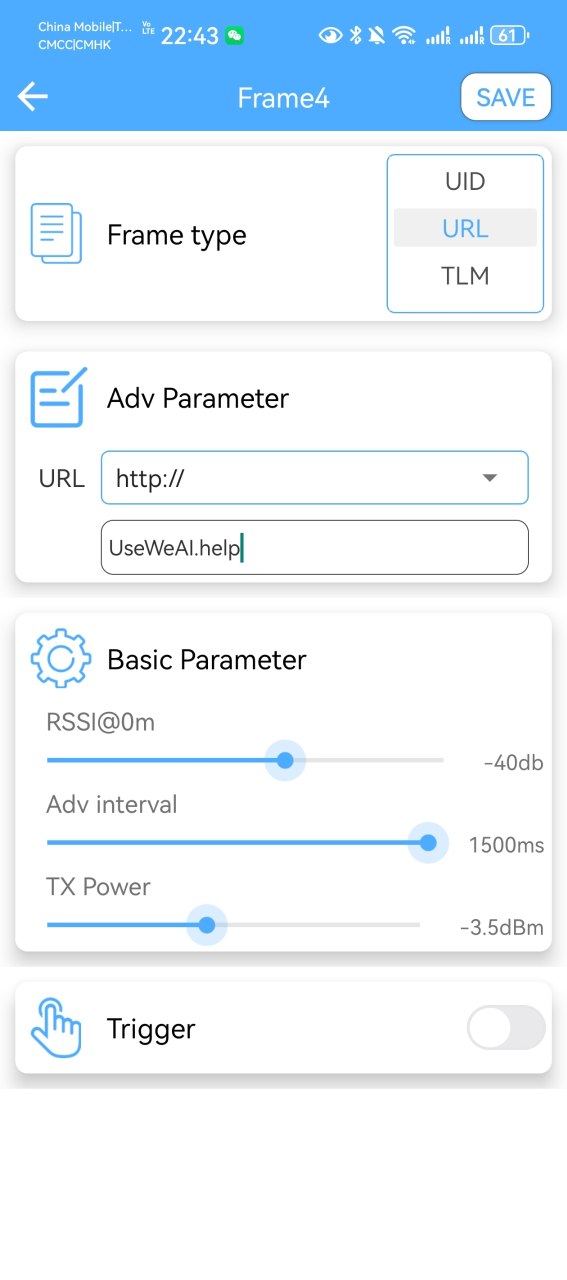
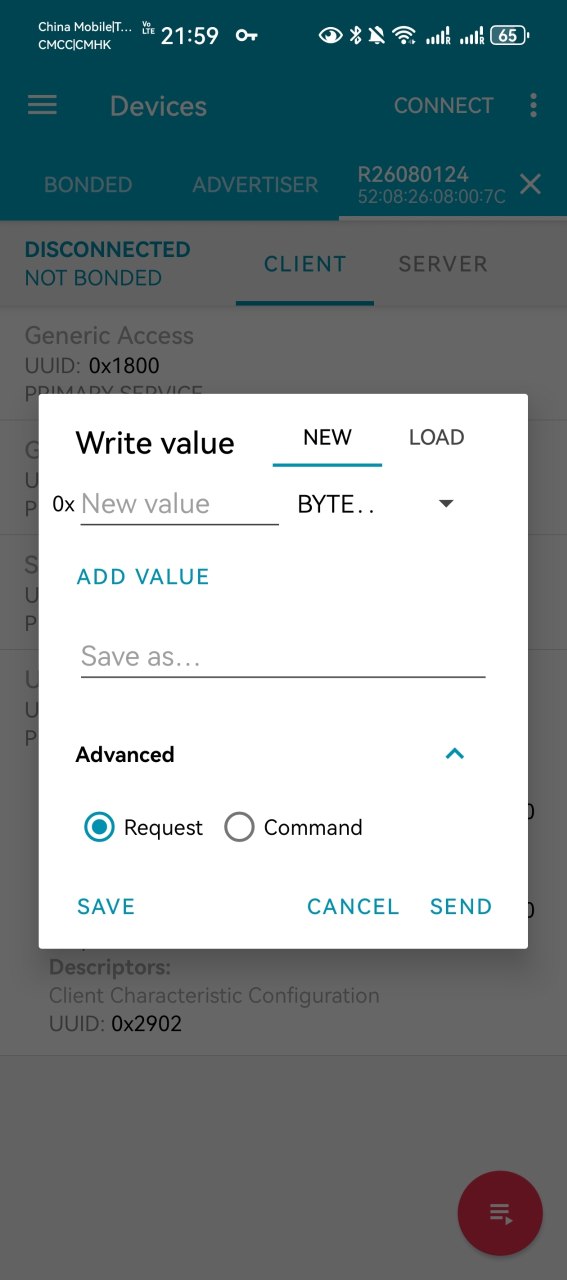
The URL-frame screens show Bluetooth configuration history, not an NFC tap. Vendor screenshots record earlier settings.
04 / A compact vocabulary
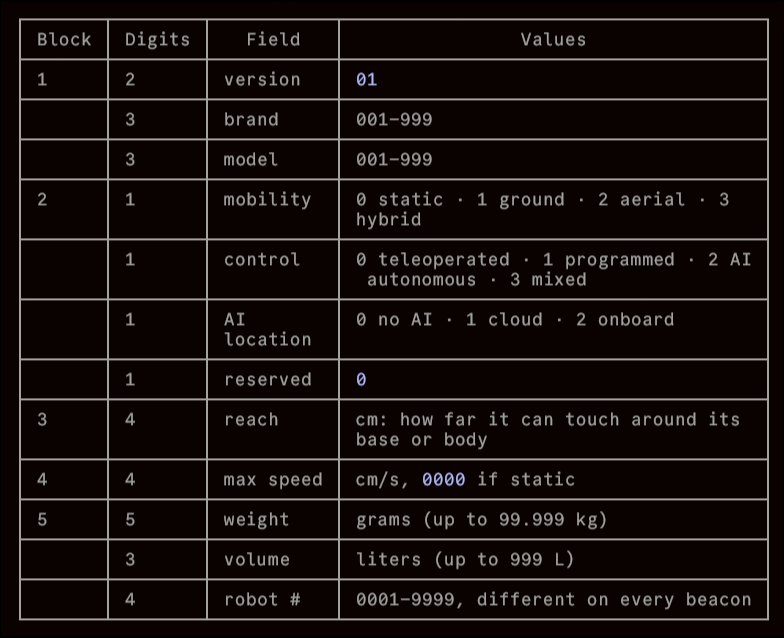
The agreed WeAI v01 format puts model and capability data alongside a unique robot number. It uses zero-padded decimal digits in the UUID’s standard groups. We’re testing how these records connect to the local robot profiles.
Illustrative example · not an assigned robot
01001001-1220-0150-0120-035000120001Brand 001 · Model 001 · Ground · Autonomous, onboard AI · 150 cm reach · 120 cm/s · 3.5 kg · 12 L · Robot 0001
| Block | Field | Digits | Meaning |
|---|---|---|---|
| 1 | Version / brand / model | 2 / 3 / 3 | 01 / 001–999 / 001–999 |
| 2 | Mobility | 1 | 0 static · 1 ground · 2 aerial · 3 hybrid |
| 2 | Control | 1 | 0 teleoperated · 1 programmed · 2 AI autonomous · 3 mixed |
| 2 | AI location / reserved | 1 / 1 | 0 no AI · 1 cloud · 2 onboard / reserved 0 |
| 3 | Reach | 4 | cm: how far it can touch around its base or body |
| 4 | Max speed | 4 | cm/s; 0000 if static |
| 5 | Weight / volume / robot # | 5 / 3 / 4 | grams up to 99,999 / litres up to 999 / 0001–9999, unique per beacon |
A broadcast identifier describes a claimed identity; it does not authenticate ownership. View the original format reference ↗
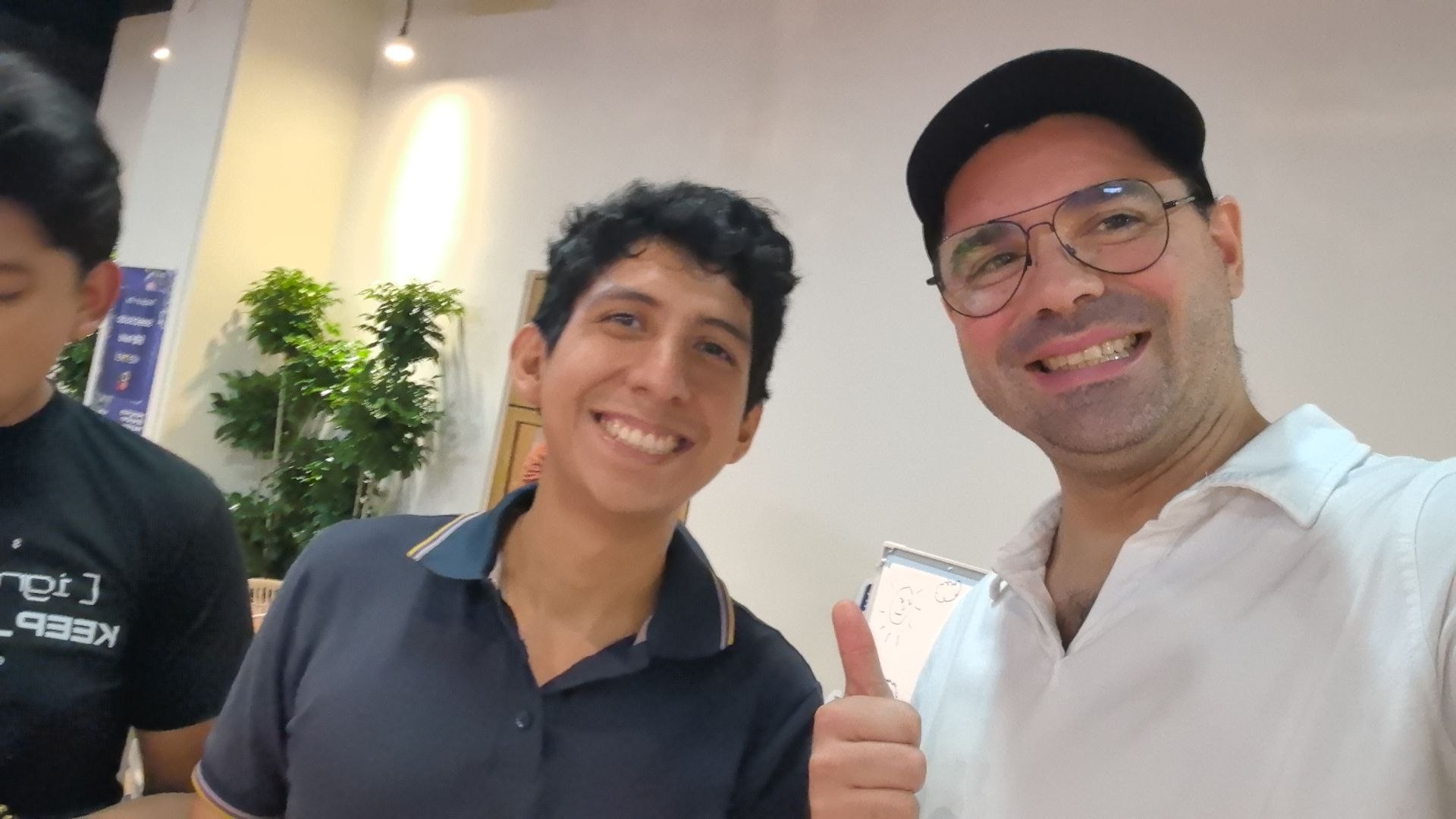
05 / The people behind it
From comparing beacons to testing the first app, we’re building WeAI through practical experiments.
Our ambition is to turn a small, affordable tag into a useful shared way to discover robots. The prototype is a starting point for research, engineering and a future product.
06 / What comes next
A proposed research and development roadmap. Each stage should earn the next through measured results.
Fix calibration quality checks and measure discovery and proximity across phones and rooms.
Test what walking and changing signal strength can tell us, with explicit uncertainty.
Validate v01 decoding, local profile matching and saved data; build NFC-linked profile pages.
Prototype hardware, repeatable calibration and a production-oriented configuration process.
Evaluate installation, usability and reliability in a limited real-world trial.
Refine the design, obtain manufacturing quotations and validate unit economics.
$2.99target selling price per beacon
A design target, subject to manufacturing and cost validation.
We’re preparing a funding proposal for research, hardware development and production validation. The funding amount and production plan are still being defined.
Explore the project ↗